WritingEssays, newest first

Bread and Circuit Boards

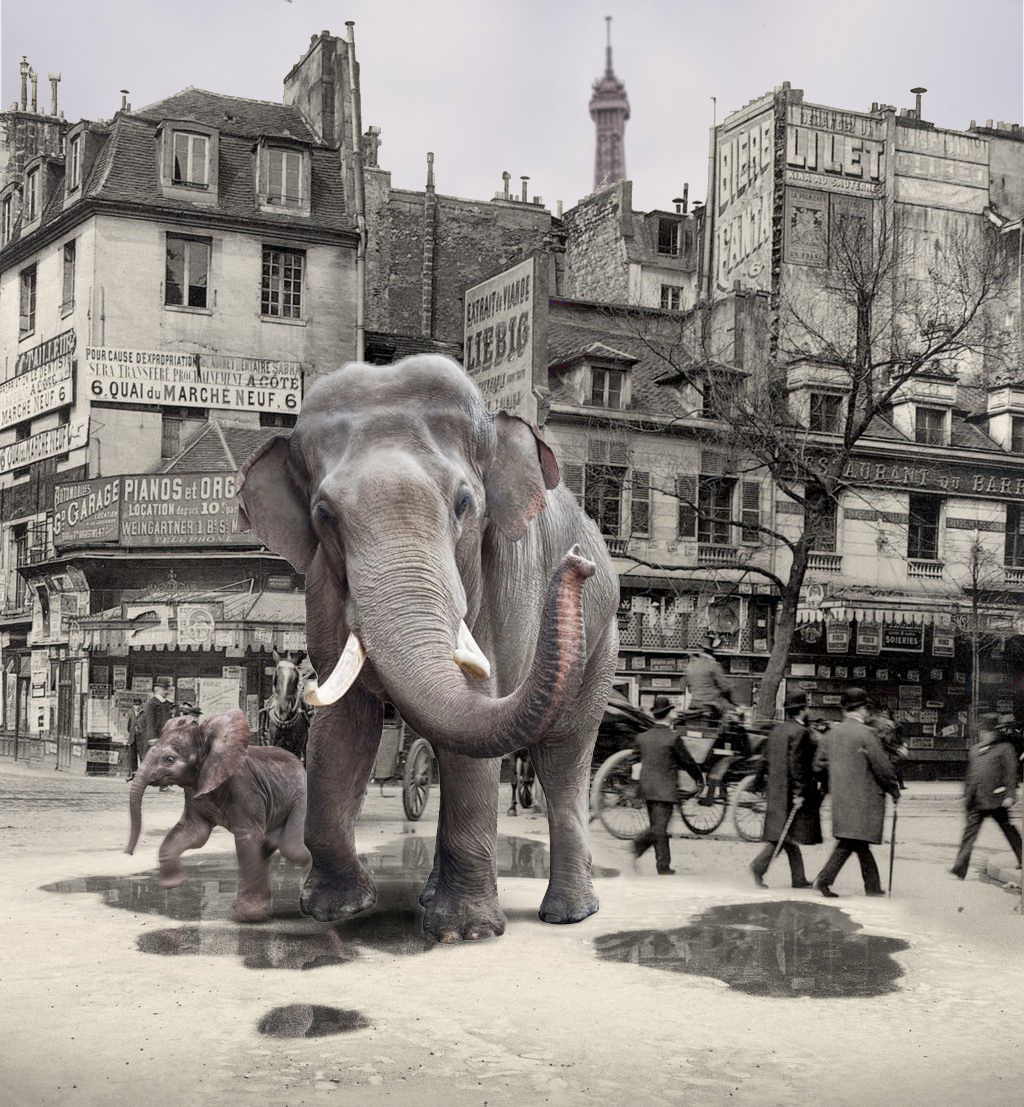
Untitled (Bread and Circuit Boards), 2021. Digital collage using found photographs.

Welcome to the Metaverse. Billed as a revolution in human interaction and experience, a neo-Renaissance of digital synergy. The dark reality will of course be quite different.

Take a look around you. The wits of our children already reside within the liquid crystal confines of the screen. Held captive inside a pixelated panopticon constructed by our javascript jailers. Passively absorbing the OLED parade of hyper-sexualised banality, ad campaigns and dubious propaganda. Not thinking. Just tapping. Their vacant faces betraying equally vacant minds; Crossed eyes pressed up against scratch-proof glass. Bathed in an eerie glow from the second they wake up, to the moment they go to bed.

Now the plan is to completely immerse their fragile impressionable psyches into this cellular cesspit, encouraging them to travel through a V.R. wormhole to exist in a pathetic parallel dimension. A desolate digital realm inhabited by soulless androids, implemented by identically hollow robots. An inadequate virtual facsimile devoid of substance. A twelve megapixel mirage glimpsed through a pair of blue-light blinkers.

Never before, prima fasciae, have humans been so completely wired to each other, and yet, we remain so pitifully disconnected.

Read more →

The Blue Bedroom

The Blue Bedroom [Henry & George], 2021. Digital collage using found photographs.

The following took place at Hanbury Hall (National Trust), at some point between May – June of 2005 – can’t remember the exact date. My now wife and I were working in the tearoom part time while going to University.

One Monday morning, a young lad from a local high school arrived for a week’s work experience, the plan was that he would spend a day in each of the various areas of the property; the main house, the tearoom, the gardens etc. For his first day he was going to work with the conservation team, (made up of two ladies) whose job it is to look after the fabric of the building and the contents of the rooms.

At around 8:30am, a long while before the property opened to visitors, the lead conservation assistant asked the young man to take the vacuum cleaner to the Blue Bedroom and hoover the carpet which surrounds a large canopied bed.

No sooner had he left, he was back at the office.

Read more →

The Future History of Art.

Untitled (The Future History of Art), 2021. Digital collage using found and personal photographs.

Some Colours And A Mast.

Défilé Historique, 2021. Digital collage using found photographs.

Freedom, Beauty, Truth and Love. The four indisputable cornerstones of the Bohemian ideal as upheld in Baz Luhrmann’s Moulin Rouge (2001). A film which so skilfully wove together pop culture and artistic sentiment, and cinematically described how it would have felt to have been immersed in the fizz of the Belle Epoque.

Then as now, art reflects its society. Caught within the eddies of Postmodernism, we’re floating, directionless – spinning around in nauseating circles. The steam powered forward thrust of the nineteenth and twentieth centuries has long since petered out. Replaced by the 4K illusion of progress, stoked with Ego and mediated by “fact-checkers” and the first five google search results.

More than a generation of people have come to misguidedly view The State as their benevolent provider. Distracted and comatose by a constant drip feed of total banality and tawdry television programmes whilst shovelling shit bike-couriered food into their gaping mouths; One eye on the gogglebox the other skipping through an equally execrable stream of narcissistic slurry. Nah, don’t bother getting dressed to nip to the chippy, you’re fine to go in your polyester jammies. Just make sure you don’t plant your Tinkerbelle slippers in the pile of dog mess on the corner. Karl Lagerfeld had it right when he declared, “sweatpants are a sign of defeat”. Der Kreig ist aus, Karl. Well and fuckin’ truly. This deplorable existential malaise seems to have trickled its way into art’s water supply.

Artists were supposed to turn a mirror on society but instead most of them turned a mirror on themselves, and it became a ‘selfie’. … Now most writers, artists, poets sold out. Too scared to challenge in case they lost the corporate sponsor or some Government grant.

Read more →

Ma’at

Untitled (Ammut, the Devourer), 2021. Digital collage using found photographs.

Truth is an energy. You can feel it. That feeling in your gut. Your Intuition; That’s truth. Knowing without knowledge. And Truth is Goodness. The Ancient Egyptians knew this. They called it “Ma’at” (pronounced May-et). Ma’at was the Universal force of truth, justice harmony and balance, most often depicted as a single white Ostrich feather, and deified as a seated goddess.

In the Palace of Truth, the soul of a deceased person would arrive to be interrogated about their Earthly life by forty-two judges, the Assessors of Ma’at, and undergo a simple trial; The seat of their existence, the human heart, was weighed against the Feather of Truth. Should it be found to be heavier, the mendacious organ was unceremoniously cast to the floor to be devoured by the monster Ammut. You would simply cease to exist, at all. Instant complete and total oblivion. If you hadn’t lived a truthful, harmonious and balanced life, you were unworthy of existence on Earth or within the spiritual realm. Pass the test, and you would be led through to the Field of Reeds, an eternal facsimile of the physical world devoted to pleasure.

What you need to bear in mind with the truth is that it is singular. No amount of subterfuge, censorship or distraction can dilute it. There are no versions nor revisions. However uncomfortable. Truth is constant. And it will always come to light.

The Hitchhiker’s Guide to the Galaxy tells us that the meaning of life is a cryptic, “42”. Was Adams referring to ancient pantheon? That the meaning of our life on Earth is to uphold truth and justice? An action which magnifies another eternal and Universal force – Love.

Read more →

The Emperor’s New Codes

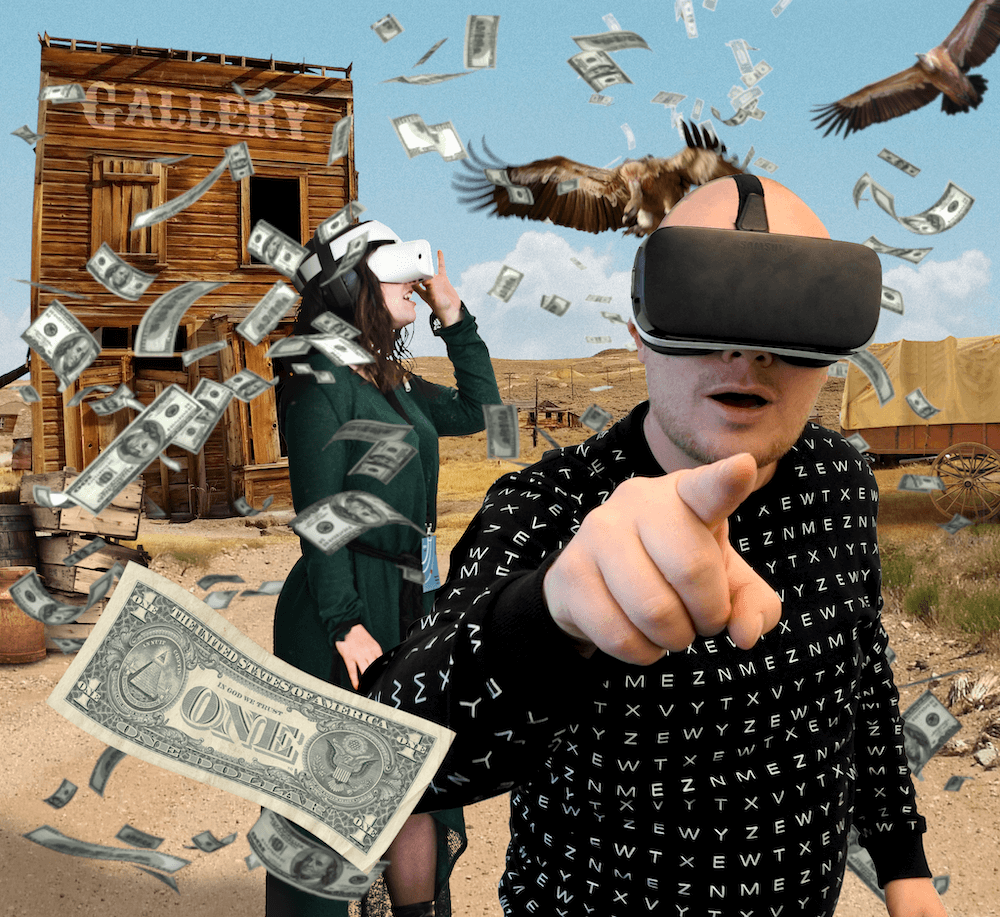
Untitled (NFTs), 2021. Digital collage using personal and found photographs.

“Step right up folks. Step right up. Have we got a show for you to see!”

I’m sorry to break it to you but “virtual environments” that you can view on the internet are just websites. Plain and simple. And viewing a website on your phone is not an “experience”; You’d have to be a few tabs short of a browser to think otherwise.

The same is true for augmented reality in the art world. I can say that full of conviction; having conceived, developed and coded the first augmented reality art exhibition in the UK funded by a public gallery: In Sheffield, back in 2011. Sure it’s fun, but at the most, augmented reality is an illusion. Twenty-first century trompe-l’oeil. A clumsy pixelated gimmick; To be held at arms length.

Along with Non-Fungible Tokens. This creeping crypto-currency stuff is coming from a Finance Industry whose traditional bubble is about burst in a major way. But as in Vegas, the House always wins. The art world isn’t appropriating it for itself and redefining it, it’s buying into someone else’s idea. Supplanting one system with another. It’s a sideways shift, not a reinvention. And context is everything. Why now? Cryptocurrency has been around since 2008! The Hedge-funders are hedging their bets.

Read more →

All the World’s a Stage

Untitled (Shakespeare’s Globe), 2021. Digital collage using found photographs.

“All the World’s a stage. And all the Men and Women merely players;” – So begins line 139 of Act 2, Scene 7, of William Shakespeare’s As You Like It (1599) – A play about political corruption, folly and redemption.

In that first line, Jaques (an outcast Lord wandering about the woods), is effectively breaking the fourth wall. And in my interpretation, declaring that what’s happening on stage is as real as what was happening in the lives of the groundlings surrounding the stage. And vice-versa.

That the World around us is theatre. Shadowy figures watch from the wings, nothing is as it seems, and most likely isn’t what you were told.

Bearing in mind that Jaques and his master, Duke Senior have just been ousted in a political coup-d’etat, more than one contemporary parallel can be drawn with those sentiments.

Read more →

De Chirico from Memory

De Chirico from memory, 2021. Digital collage using personal and found photographs.

Turns out I was remembering “The Uncertainty of the Poet.” (1913).

Romanticism

Untitled (Neoclassical Landscape), 2021. Digital collage using personal and found photographs.

Hello. My name is Chris, and I’m addicted to country houses.

2021

Untitled (Gorillas), 2021. Digital collage using found photographs.

Screens. We seem to spend our lives looking at them. From the ones at the train station, to the black mirrors we carry around with us everyday. Out of all of them, the best ones have to be movie screens.

Film maker and analyst Rob Ager has a brilliant theory surrounding the interpretation of one of Cinema’s masterpieces: Stanley Kubrick’s 2001: A Space Odyssey, particularly the meaning behind the iconic “Monolith”.

Kubrick was insistent that the movie be filmed in “Super Panavision 70”, which required spherical lenses and 65mm film, double the size of regular filmstock. This unconventional combination provided an aspect ratio of 2.20:1, much wider than the widescreen formats used now. But incredibly close to that of the mysterious monochrome slab, rotated ninety degrees.

In the two reel theatre version, Kubrick inserted one minute of darkness at the beginning of the second half; And berated the BBC when they cropped the footage for broadcast. It was imperative the film be shown as intended.

Read more →

Dutch Still Life (with Banana)

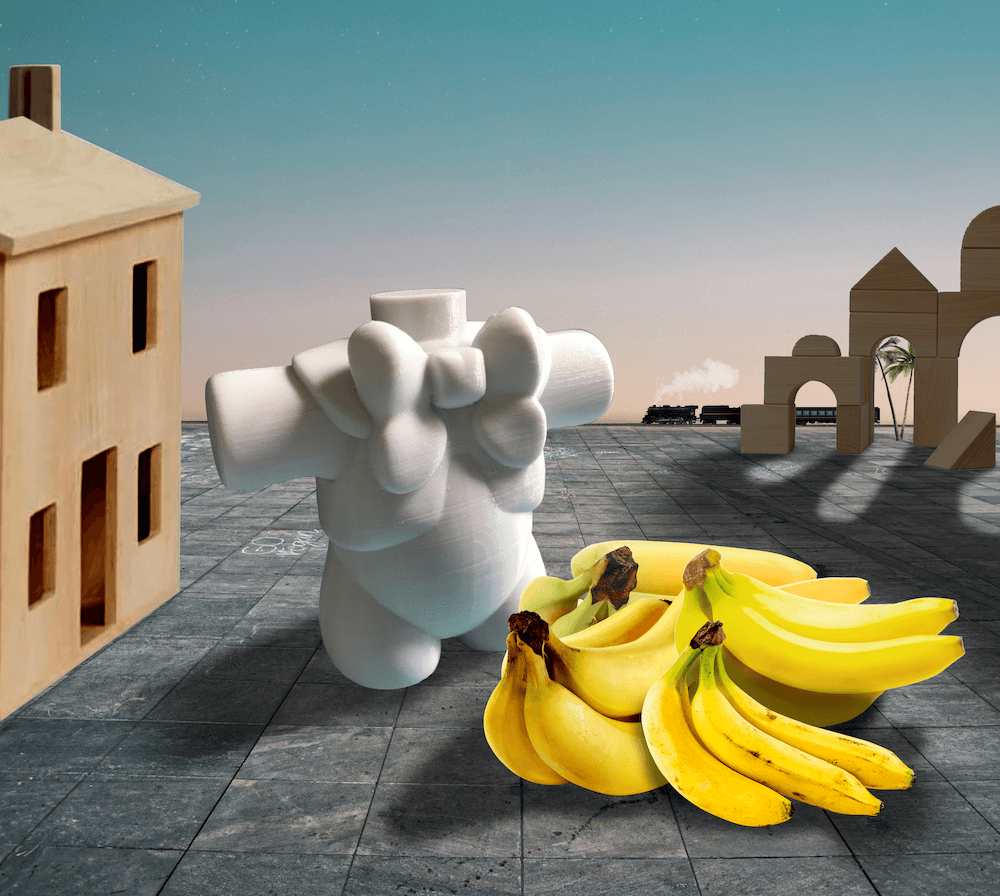
Dutch Still Life (with Banana) constructed from memory, 2021, digital collage using found photographs.

Hopi

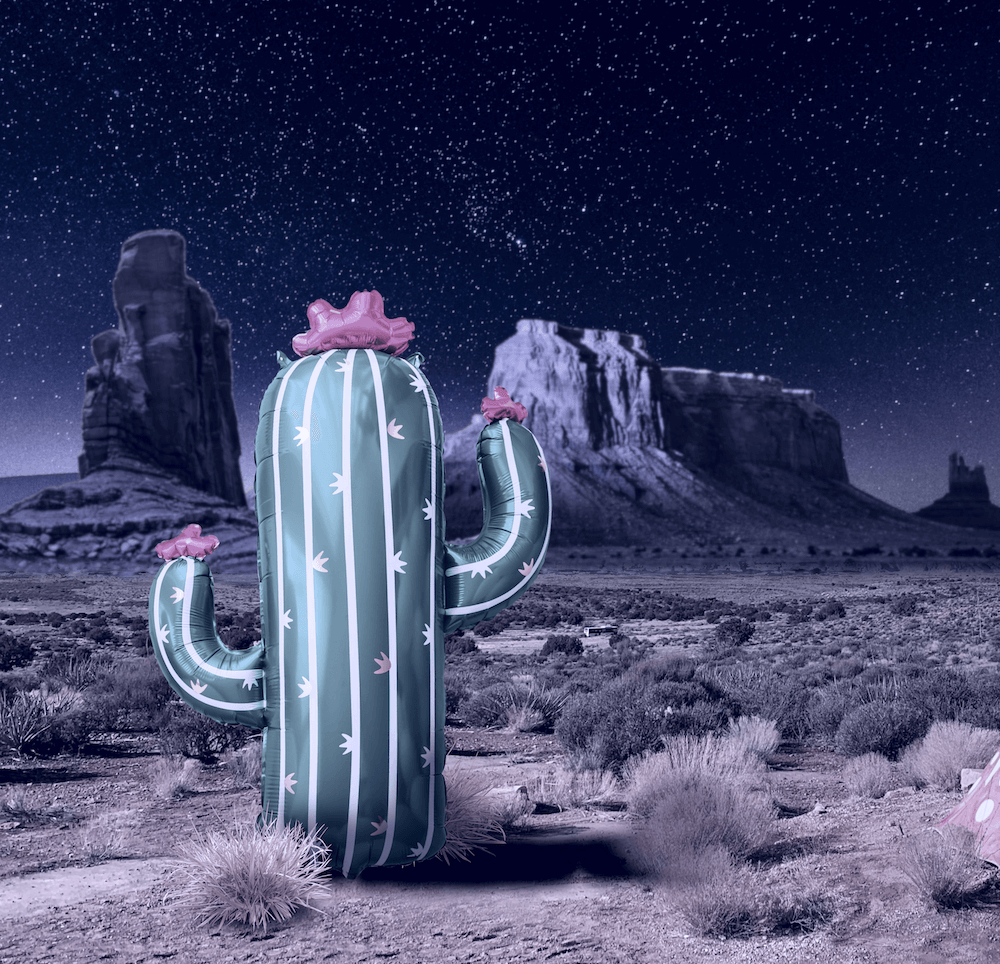
Untitled (Desert Scene), 2021. Digital collage using found photographs.

Good morning! How did you sleep? Well, I hope. No nightmares? I only ask because the Hopi tribe of Native Americans believe that our dreams are as real as our waking life.

They have lived in the deserts of north-eastern Arizona for thousands of years and are reputed to be the oldest, longest surviving people on Earth. Their name means, “People of Peace.”

According to Hopi tradition, we have been through two worlds already and currently stand on the edge of a fourth. An asteroid destroyed the first world and ice claimed the second. This, the third world, will be destroyed by mankind because of our avaristic lust for technology and dominion over the natural world. Forsaking our spiritual selves for science and technology.

At “Prophecy Rock” near Oraibi, Arizona, the future is clearly mapped out in ancient petroglyphs. All three worlds are carved as circles watched over by the god Maasaw, sworn guardian of Mother Earth. The third circle is incomplete, as if the clock stands at five minutes to midnight. Forwards in time, Maasaw is shown clutching an ear of corn within the fourth world indicating that when the hour strikes, nature will reclaim what was hers all along.

Technicolor Transcendence

Untitled (Walt), 2021, digital collage of personal and found photographs.

I once had breakfast with Eeyore, and no, I wasn’t on drugs. I was at Disney World. The happiest place on Earth.

You’d think that the hyper-Americana of Main Street at the Magic Kingdom would wear pretty thin, pretty quickly. But it doesn’t. It’s difficult to describe – The whole place is so artificial that it actually supplants reality. It becomes brilliantly real. An immaculately presented technicolor transcendence. Like what Jeff Koons is after. Maybe it’s the Floridian sun, maybe it’s pixie dust? Who knows.

Even the American flags at Disney World aren’t real. Not much else is either, but that’s the beauty of it. The Stars and Stripes contain only slight differences exempting them from the strict laws and regulations surrounding the reverent treatment of the US national flag. The one in this image has 49 stars.

Morphic Resonance

Untitled (Morphic Resonance), 2021, Digital collage using personal and found photographs.

No one knows how pigeons find their way home. But they do, even if you blindfold them – not that I’ve ever tried it.

I’ll leave that to Dr Rupert Sheldrake of Trinity College, Cambridge, whose research examines the possible existence of multiple energetic or “morphic” fields connecting all things, animal, mineral and vegetable. “Morphic Resonance” is a sort of collective global subconscious through which all thought flows; And could explain bird murmurations, human intuition, simultaneous thought and other more esoteric things like psychic mediumship.

He and his research team conducted a number of experiments with humanely disoriented Pigeons where everything was done to impede their ability to navigate. Blindfolds, blocking their nasal cavities, releasing them halfway around the world – you name it, they tried it. And still they came back.

Another series of slightly more grisly experiments involved two distinct populations of fish (I think they were Bass), in two separate lakes some 25 miles apart. A fishing lure was designed which would be incredibly painful once the Bass had succumbed to it’s glittery charms. It was only ever used in the first lake and over time those fish learned to avoid it. What’s crazy is, once it was introduced to the other lake some months later, the fish there already knew it was something to steer clear of, and didn’t take the bait.

Read more →

The One Electron Theory

[Untitled], 2021, Digital collage using personal and found photographs.

Mornin’! Listen, I know it’s early: I just need to tell you about the “One Electron Theory”.

In 1940 Physicist John Wheeler called his mate Richard Feynman to run something by him, something he’d been working on for a while and which had been keeping him up at night.

He posited that there is only one singular electron in the entire known and unknown Universe, and that it is in everything, everywhere, all at once. Even moving backwards and forwards in “time”. [mindblown]. I’ll say that again – one electron, which is in absolutely every-thing, every-where, simultaneously; And connects past, present and probably even future together as one big eternal NOW.

What’s more, the maths apparently checks out. [double mindblown].

Read more →

Shanidar

Shanidar, (2021), Digital collage using found photographs. (The background image is Shanidar cave where the remains were found.)

It’s always been assumed that Neanderthals were brutish, dumb and uncultured, but recent discoveries have cast serious doubt on that. What is known, is that they existed for 300,000 years and throughout that time remained a nomadic species of expert hunters and survivalists. Family cohorts would meet annually at specific sites to swap females and broaden the gene pool. Perhaps evidence of a rudimentary understanding that incest wouldn’t do anybody any favours. It is estimated that only around 100,000 Neanderthals inhabited continental Europe, before they dissolved into the Homo Sapien population through interbreeding some 12,000 years ago.

Their physiology was such that they most likely could make vocal sounds; Surprisingly much more highly pitched than you would imagine. It’s thought that if a spoken language didn’t develop, music dance and art are the most likely forms of communication they could have employed, to gain trust and strengthen tribal bonds. Although not much Neanderthal “stuff” has survived.

Ralph Solceki threw a Mammoth sized spanner into the works of accepted paleo-anthropology when in 1960, he and his team came across “Shanidar 4” the well preserved remains of one of our palaeolithic ancestors in a cave, in Iraqi Kurdistan, which seemed to have been purposefully buried.

Fast forward to 2018 and the first fully articulated Neanderthal remains to be found for two decades were discovered in the same cave, known as “Shanidar D”. As it turned out, very close to where the other had been interred.

Read more →

Ugo Rondinone – Les Innocents

This is still.life (Moss Green Candle) by Ugo Rondinone (Ooo -go Ron – di – no – nay). Well, it’s a photograph of it that I’ve borrowed from his website. 

Ugo’s sculpture is made from lead, carefully controlled in its molten state to form a candle, which is then cast in bronze and painted.

He makes them in a range of colours and statures, but this one, this Moss Green one, brings to mind a pretty grim page in the history of Paris;

The story of Les Innocents, a cemetery located in what is now the Les Halles district of the city.

Read more →

Between a Rock and a Hard Drive

What do you get if you cross a grey lump,  a stretch of chain-link fence and a splattering of day-glo paint? … about 95% of the work that zips through my Instagram feed on a daily basis.*

You can’t get a razor’s edge between most of it, and it’s got to a point where I’m just not seeing it anymore. Concrete induced snow-blindness.

I’m not dismissing this work out of hand, fair play to you, you’ve obviously arrived there for your own reasons; I’d just like you to take a step back and ask yourselves: “What am I doing with this block of Griotte that hundreds of others aren’t?” – and if you can’t answer that question, maybe it’s time to try something else.

And what’s with all these new “isms”? Why would artists themselves want to classify what it is that they do. Isn’t it better not to know?

Read more →

In Theory

In theory, this is going to be an interesting short bit of writing. I spotted a tweet recently which said something along the lines of “I’m having a hard time making my work fit to the theories in my head.”

It seems to me, that artists are now expected to process, contextualise, place and evaluate what they have made before they’ve even made it. But what you’re doing, if you’re putting theory before making, is putting the cart before the horse – a cart laden with books.

How many times have you gone into a gallery and been handed a still warm, photocopied rationale for the works laid out in front of you? “You’ll need to read this before you look at the work, otherwise it won’t make sense at all”.

Anything that needs to be accompanied by 6 sides of A4 in 10pt type, in order to ‘understand’ it, just plain ‘aint working.

Read more →

Switching Off.

Can we talk about arts Television for a moment? Only for a moment, I realise that the new series of  Strictly… is soon to begin, but if I could just have your attention until the Glitterball descends and your gaze is caught, Moth-like, I’d really appreciate it.  

I did my GCSE’s 13 years ago, but for some reason those people who make and present arts Television seem to be under the impression that I’m still doing them. Where has all the depth gone? 

I used to stay up to watch The South Bank Show late on a Sunday night, lulled by the dulcet tones of Lord Bragg, to the point where it was sometimes difficult to get up for School on a Monday morning. It was through Melvyn that I was first introduced to artists like Gehard Richter, David Hockney and Francis Bacon; all painters I grant you, but the profiles were insightful, the questioning wasn’t held back or dumbed down – and the presenters were informed. 

Fast forward to 2014 and you might say that the opposite is true, in fact I would. To add insult to injury, the presenter often assumes an air of superiority over the artist – only to be shot down in flames by the likes of Sir Anthony Caro on an otherwise unremarkable Culture Show.

Read more →

m***y (abridged)

image

Let’s make no bones about it, no artist worth their salt makes work with the express intent of profiting financially from it. M***y is absolutely not the raison d’être or driving force behind my creative work, and I’m sure the same is true of my peers. It is however a necessity, it always has been and perhaps always will be.

The prevailing attitude seems to be that to make money from the work you do as an artist somehow diminishes its cultural significance; this does not have to be the case. From my point of view, entrepreneurship in art is all about circumvention, a wholly positive attitude. Finding other ways to get your work to people. If what you produce is going to make any real difference to people then it has to be ‘consumed’ – it is entirely reasonable to expect some financial recompense for what you have made. How else are you going to make more work, pay the rent? Or eat?  Maybe it’s time for us to adopt a more entrepreneurial attitude. Not to ‘sell out’, but to find other ways through which creative practices can be maintained; critically, intellectually and financially.

I’m not talking about tapping into the diamond encrusted contemporary art market, what I mean is affording artists the ability to earn an honest living through the work they produce – and why can’t artists actively seek out and develop methods through which to do this? Is that too idealistic? Some would say “yes” I’m sure, but from the comfort of the family BMW on the way to an unpaid Internship, that’s quite easy to do.

Something and Nothing

image

I can’t tell you how many times I’ve been asked the exasperated question, “but… what does it mean?!” Both in relation to my own practice and that of other artists. It’s either that or “what’s the point of it?!” *see previous text.

It is a fanciful notion to believe that artworks contain meaning within their physical fabric; as if the artist has somehow managed to an encase an idea within an object – nonetheless, that wholly naive assertion is posited by many people, artists among them.

Even if they had managed such an alchemical feat, therein lies another problem; the unrealistic expectation of many a gallery-goer – a release of that meaning within five seconds of being introduced.

The art object can only ever present the viewer with its lineage – evidence of the material processes and/or references which brought them into being. They are for all intents and purposes ‘dumb’ objects; the remains of a process we are not often privy to.

Read more →

Straight to the Point.

image

“I’ll have to drop ‘ya just ‘ere”, strained the Cab driver, negotiating the traffic across Waterloo Bridge. Money changed hands through a gap in the perspex and with an ebullient farewell we made our way around the concrete edifice of the Southbank Centre towards the Hayward Gallery.

Wandering through the Brutalist canyon, past all manner of extraneous and time-worn Fibreglass ‘play-structures’ we eventually arrived at the entrance to the gallery.

In the corner by the Admissions Desk stood a Standard lamp straight out of the pages of a Habitat catalogue, flicking on and off intermittently. It was hard to tell whether this was a work by Creed or just a gimmicky space-filler conjured up by a well meaning Intern, intended to liven up an otherwise featureless foyer – the coarseness of its installation seemed to suggest the latter.

Once an issue with the ticket machine had been rectified and more money had changed hands, we were let through to the gallery. A Bouncer with an earpiece, who seemed as though he’d be more comfortable manning the door at a Gentleman’s Club, took a cursory glance at the tickets and showed us in.

Read more →

A Few Stones Unturned.

It was on a recent trip to the Saatchi Gallery to see The Shape of Things to Come: New Sculpture, the obligatory Summer ’Blockbuster’, that some fundamental questions about both the creation and display of art were thrown into quite sharp relief. Spot the charmingly witty pun…didn’t see it?…well that might be important a bit further on.

Entering Gallery 1, a vast utterly pristine ‘white cube’ space, the viewer is presented with a field of eight roughly hewn boulders scattered about the gallery as if they had been teleported from Avebury. The work is Summit (2009) by Belgian artist Kris Martin. 

Atop each of the rocks stands a small paper cross coloured with ink; which both the artist and the gallery suggest indicates that the stones have been conquered, alluding to such things as; dominion, struggle, conquest and victory. 

Beneath each lump of stone sits a rusting steel ‘pallet’ like object comprised of an approximately one metre square sheet, itself elevated on three “I” beams welded equidistantly along the same axis. This forms a very noticeable, seemingly integral element of the work. 

Read more →